Try out our new interactive games!
New editorial out in Science
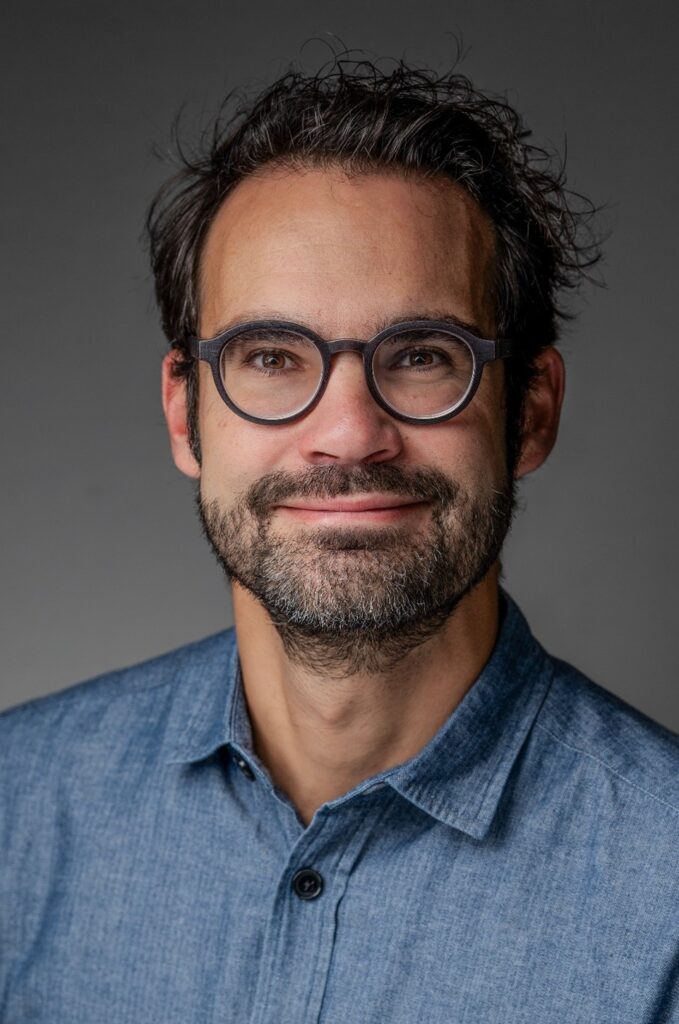
I’m an assistant professor in UC Santa Barbara’s Environmental Studies Program and lead the River System Science & Sustainability (RS³) Lab. My work helps define river system science, viewing rivers as connected natural-social-engineered systems, and uses that lens to design sustainable infrastructure, maintain natural river processes, and reduce human exposure to hydrologic hazards. Before UCSB, I led water research efforts at Stanford’s Natural Capital Project with agencies, MDBs, and NGOs. I’ve published widely (e.g., Nature, PNAS, Nature Sustainability, ERL, WRR) and focus on open, decision-relevant science.
Contact & Academic Profiles:
I’m an assistant professor in UC Santa Barbara’s Environmental Studies Program and lead the River System Science & Sustainability (RS³) Lab. My work helps define river system science, viewing rivers as connected natural-social-engineered systems, and uses that lens to design sustainable infrastructure, maintain natural river processes, and reduce human exposure to hydrologic hazards. Before UCSB, I led water research efforts at Stanford’s Natural Capital Project with agencies, MDBs, and NGOs. I’ve published widely (e.g., Nature, PNAS, Nature Sustainability, ERL, WRR) and focus on open, decision-relevant science.
Contact & Academic Profiles:
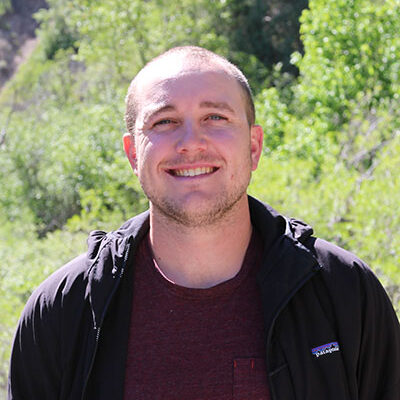
Paxton Ridgway is a hydrologist with experience in river restoration and water resources engineering across the Western U.S. After earning his B.Sc. in Environmental Studies from UC Santa Barbara, he worked on fluvial restoration projects in California and Nevada before pursuing graduate studies at Utah State University. There, he completed an M.Sc. in River Mechanics and Modeling, focusing on the geomorphic impacts of wildfires and debris flows, alongside an MBA that broadened his perspective on the leadership and financial aspects of environmental challenges.
His current research examines how wildfires and sediment dynamics interact with rivers and water infrastructure, with the aim of supporting more sustainable river management. Beyond his work, Paxton is passionate about the outdoors, often spending his free time on the ocean or exploring the mountains.

Zhaowei Ding studies sustainable pathways for water–energy–food–ecosystem systems under climate change. Her previous research in the Amazon Basin highlighted the crucial role of irrigation management in shaping a sustainable future, work that was featured by Stanford Energy. She holds a Ph.D. in Ecology from the Chinese Academy of Sciences, as well as degrees in Physical Geography and Urban and Regional Planning from Beijing Normal University and Beijing Forestry University.
Her broader interests lie in understanding the hydrological, ecological, and social processes that drive watershed-scale management. Alongside her research, Zhaowei teaches Oceanography and Meteorology at Cascadia College in Washington, where she emphasizes experiential learning, inquiry-driven instruction, and real-world problem-solving to inspire the next generation of critical thinkers.
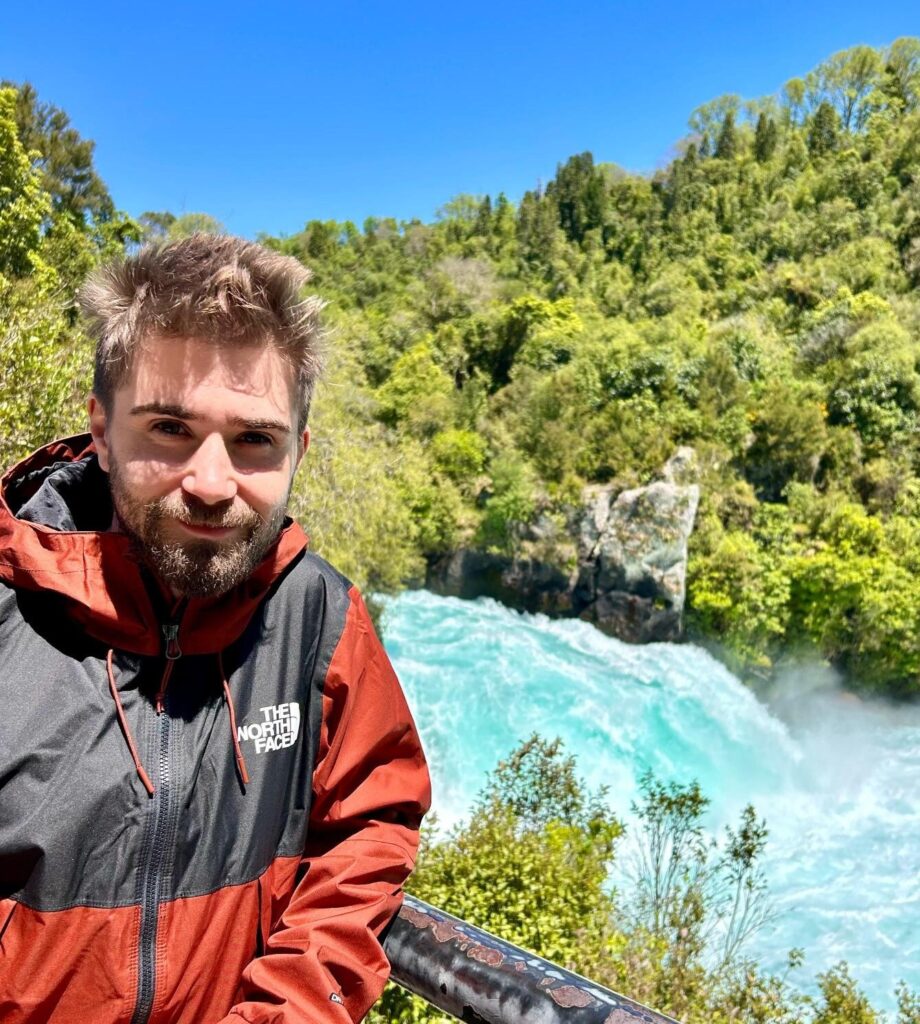
Andrea is a hydrologist and hydrogeologist fascinated by how water connects natural and human-made systems. He earned his Ph.D. in Earth Sciences from the University of Milan in 2024, studying climate change impacts on Alpine water resources and using radar-derived precipitation to improve hydrological modeling in data-scarce mountain terrain. He then worked as a postdoctoral researcher at Carnegie Science on the water–energy–food nexus, focusing on unsustainable irrigation and managed aquifer recharge as a climate adaptation strategy.
In the RS3 Lab, Andrea studies groundwater–surface water interactions across global river networks and assesses pumped-storage hydropower opportunities at regional to global scales. Outside research, he enjoys sports and spending time in nature.

Katie Zheng is a fourth-year undergraduate student pursuing a double major in Environmental Studies and Philosophy at UC Santa Barbara. Her work involves harmonizing dam databases across global, national, and regional scales to support sustainable system-scale planning for dams. She also leads and mentors a research group of UCSB students, critically analyzing the environmental impact of dams funded by major multilateral development banks.
Katie also works as a legal assistant and intends to study environmental law in the future, bridging her research interests in energy sustainability with her passion for legal advocacy. In her free time, she enjoys hiking new trails and cooking with friends.

Jeffery was a Postdoctoral Scholar in the RS3 Lab at UC Santa Barbara, working with Rafael J.P. Schmitt on optimizing sustainable hydropower and riverine connectivity. He earned his PhD at The University of Hong Kong, where he worked with David Dudgeon and Jia Huan Liew on the impacts of fragmentation by dams on diadromous species at global and regional scales. Before that, he earned an MRes in Tropical Forest Ecology from Imperial College London, studying multiple-stressor interactions on ecosystem functioning using pond mesocosms. Prior to his academic career, he founded Freshwater Collective, a conservation organization that aims to bridge the gap between research and education in freshwater ecology.
In October 2026, Jeffery joined Albert Ruhí at UC Berkeley as a Croucher Fellow to investigate how extreme events are reshuffling diadromous fishes.

At the Schmitt Lab for River System Science and Sustainability, we explore rivers as living networks, essential for a sustainable future. Our work integrates systems thinking with socio-environmental management to create innovative solutions for global challenges.
If you’re passionate about science, nature, and the future of rivers, this is the place for you.
Hannah Helms – Mapping mining impacts in Colorado
Ty Frankling – Rivers’ overlooked ecosystem services: a bibliometric approach
Student-led research on the role of multilateral development banks in the recent (2010–2025) hydropower buildout:
Anne Marie van der Hoek
Caleb Neely
Daniel Matthys
Marissa Gill
Yuyao Guo

We are always looking for talented researchers to join the team. Opportunities for postdoctoral fellowships and PhD support depend on available funding; current openings are posted on our Jobs page (link). If no positions are listed, we can work together to identify suitable scholarships or fellowships and, where appropriate, prepare applications before you start. If you are interested in joining RS³, please email Rafael with a few lines outlining your research interests, a brief plan for what you would like to work on, and why RS³ would be a good fit.
I admit Ph.D students mostly through the Bren School’s PhD in Environmental Science and Management. Usually, admission begins in early September and closes December 15 each year. Admissions depend on funding on your alignment with our research interests. If you consider applying, please reach out to Rafael after reviewing the following information
here.
I am looking forward to working with students who are curious about rivers processes and management. RA and TA positions in the lab are a chance to dive deeper into these topics through you helping with research projects or my courses. Please be in touch if you are interested to hear more about opportunities.
In the RS3 lab we ar exceited to integrate undergrads into our research! We offer opportunities in the form of honors contract and RA ships (depending on research needs and funding). If you are interested in river science or engineering, please contact Rafael and include a short message on (1) your interests and (2) why you would like to join the team.